
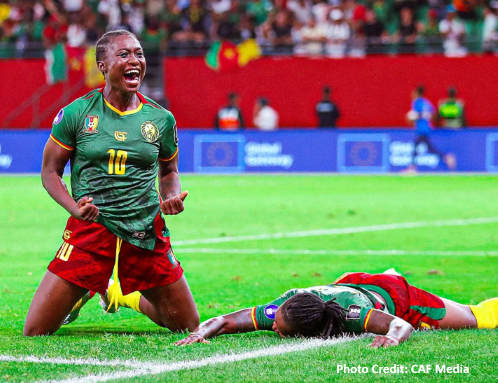

Few would have imagined how WAFCON 2026 would unfold.
Not Malawi reaching the final in their first-ever appearance. Not defending champions Nigeria being shaken by the tournament’s newest challengers. Not Zambia, armed with some of Africa’s most feared attacking talent, falling short of expectations.
And perhaps most importantly, few would have imagined that after three painful defeats in previous WAFCON finals, Cameroon would finally have their moment.
By the time the curtain came down on the 2026 Women’s Africa Cup of Nations in Morocco, the tournament had delivered shock, heartbreak, redemption and history in equal measure.
Cameroon stood tallest of all.
The Indomitable Lionesses defeated tournament debutants Malawi 3–0 in the final, finally lifting the WAFCON trophy after three unsuccessful attempts at the final hurdle.
But there was more at stake than continental glory.
WAFCON 2026 was also part of Africa’s qualification route for the 2027 FIFA Women’s World Cup, meaning some teams left Morocco with far more than a good tournament run, while others were left counting the cost of missed opportunities.
These were some of the heroes and headaches that defined an unforgettable WAFCON 2026.
HEROES
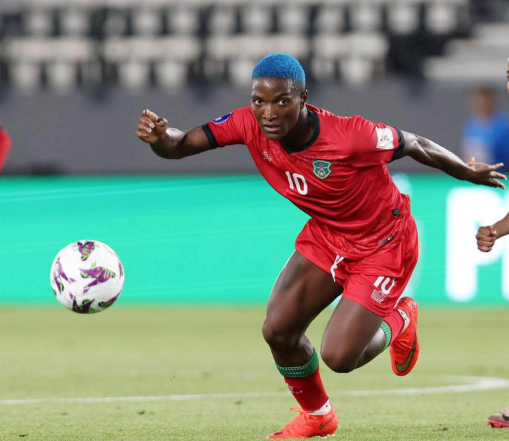
MALAWI: FROM DEBUTANTS TO BELIEVERS
Nobody could have asked for a tougher opening assignment.
Malawi's first-ever WAFCON match was against defending champions Nigeria. For the Scorchers, it was supposed to be a baptism of fire.
Instead, they lit the fire themselves.
Malawi stunned Nigeria 3–2 in one of the defining early moments of the tournament, announcing themselves as a side that had not travelled to Morocco simply to make up the numbers.
From there, belief grew.
The Scorchers continued to defy expectations, fighting their way through a difficult group before coming from behind to defeat Ghana 2–1 in the quarter-finals.
That victory did more than take Malawi into the semi-finals. It also secured their first-ever qualification for the FIFA Women’s World Cup.
Malawi then defeated Algeria to reach the final on their tournament debut.
The Chawinga sisters were central to that story, particularly Temwa Chawinga, whose goals and influence helped power Malawi’s historic campaign. Temwa finished the tournament with five goals, putting her alongside Barbra Banda and Marie Ngah Manga among the competition’s leading scorers.
The final, however, proved to be one hurdle too far.
Cameroon defeated Malawi 3–0 to lift the trophy, bringing the Scorchers' fairytale campaign to an end. Yet Malawi left Morocco with their reputation transformed.
They arrived as debutants.
They left as finalists and World Cup qualifiers.
CAMEROON: FOURTH TIME LUCKY
Cameroon had been here before.
They knew what it felt like to reach a WAFCON final. They also knew the pain of losing one.
Before Morocco 2026, the Indomitable Lionesses had reached three finals without lifting the trophy. Each time, they had come close. Each time, they had fallen short.
In 2026, however, the story finally changed.
Cameroon eliminated defending champions Nigeria in the quarter-finals before overcoming hosts Morocco on penalties in the semi-final.
Goalkeeper Michaely Bihina was one of the key figures in that run. She produced nine saves against Nigeria before stopping three penalties in the shootout against Morocco.
Cameroon once again reached the final, this time facing tournament debutants Malawi. But unlike their previous three attempts, there would be no heartbreak at the final hurdle.
The Indomitable Lionesses delivered when it mattered most.
Cameroon defeated Malawi 3–0 to win the Women’s Africa Cup of Nations for the first time.
Their victory was about more than a trophy. It was about persistence, surviving years of near misses and finally turning heartbreak into history.
The tournament also secured Cameroon’s place at the 2027 FIFA Women’s World Cup.
For Cameroon, Morocco 2026 will be remembered as the tournament where the long wait finally ended.
ALGERIA: PROGRESS WORTH CELEBRATING
Algeria may not have lifted the trophy, but their tournament deserves recognition.
They emerged as one of the sides that demonstrated real progress and showed that the landscape of African women’s football is continuing to change.
Their 2–1 comeback victory over Côte d’Ivoire in the quarter-finals took Algeria into the WAFCON semi-finals for the first time.
More importantly, it secured their first-ever qualification for the FIFA Women’s World Cup.
Ultimately, Algeria fell short of the final after losing to Malawi, but their campaign was far from a failure.
They left Morocco with greater confidence, valuable experience and, most importantly, a place at Brazil 2027.
In a tournament dominated by the rise of new and emerging challengers, Algeria were among the teams that made their mark.
They may not have been champions, but they were certainly among the tournament’s heroes.
HEADACHES
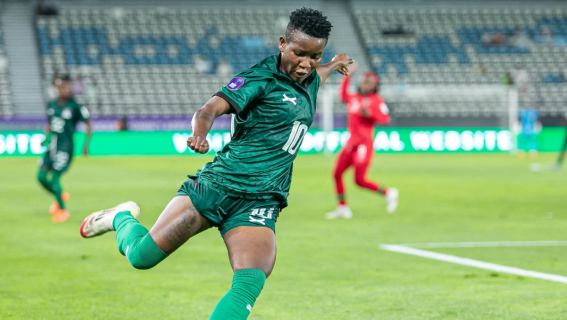
ZAMBIA: A MISSED OPPORTUNITY
If Malawi announced themselves with a shock, Zambia announced themselves with an explosion.
The Copper Queens opened their campaign with a 6–0 victory over Egypt, with Barbra Banda scoring four times in one of the standout individual performances of the tournament.
With Banda and Racheal Kundananji leading the attack, Zambia possessed the kind of firepower capable of troubling any defence.
But tournament football is not only about moments of brilliance.
The 1–0 defeat to Nigeria proved costly, particularly because the Super Falcons played with 10 players for much of the match.
Zambia responded by beating Malawi 2–1 in their final group match, with Banda scoring her fifth goal of the tournament.
That left Malawi, Nigeria and Zambia all level on six points.
The group had to be separated by the head-to-head criteria, and after the teams remained level on points and goal difference in their matches against one another, goals scored proved decisive.
Malawi advanced first, Nigeria second and Zambia were eliminated.
Two victories from three matches were not enough.
For a team with so much quality, WAFCON 2026 will feel like a missed opportunity.
The disappointment was even greater because World Cup qualification was also at stake. By failing to reach the quarter-finals, Zambia missed the chance to continue competing for one of Africa’s places at the 2027 FIFA Women’s World Cup.
The talent was there.
The firepower was there.
But the Copper Queens still went home early.
NIGERIA: NOT GOOD ENOUGH
Nigeria arrived as defending champions and 10-time winners.
Then they were stunned by Malawi.
That 3–2 defeat was one of the tournament's biggest shocks and immediately changed the tone of Nigeria's campaign.
To their credit, the Super Falcons recovered and progressed from the group, reminding everyone that they remain one of the giants of African women’s football.
But their title defence ended in the quarter-finals.
Cameroon defeated Nigeria 1–0, eliminating the defending champions and denying them automatic qualification for the 2027 FIFA Women’s World Cup.
Nigeria were given another opportunity through the World Cup play-off route for losing quarter-finalists, but they were beaten 2–1 by South Africa.
So, was it a successful tournament?
Certainly not.
Nigeria had good moments and showed flashes of their traditional quality, but for a defending champion and the most successful nation in the history of the competition, that was not enough.
The Super Falcons lost their continental crown and left Morocco with their World Cup ambitions under pressure.
For a team with their history and expectations, WAFCON 2026 simply was not good enough.
MOROCCO: HOME HEARTBREAK AGAIN
Morocco had home support behind them and every reason to believe this could finally be their tournament.
The hosts had reached the previous two WAFCON finals and once again made a strong run through the competition.
They also achieved an important objective by reaching the semi-finals and securing qualification for the 2027 FIFA Women’s World Cup.
But the continental title remained out of reach.
Morocco faced Cameroon in the semi-final and battled through 120 goalless minutes before losing 3–1 on penalties.
For a team playing in front of its own supporters and hoping to finally lift the trophy, it was another painful ending.
Their tournament cannot be described as a failure. World Cup qualification had been secured and another deep WAFCON run showed their place among the continent’s strongest teams.
But they had hoped for more.
Morocco will go to Brazil.
The wait to become African champions continues.
THE REAL STORY OF WAFCON 2026
The biggest story from Morocco was not simply about who lifted the trophy.
Yes, Cameroon finally conquered Africa.
But WAFCON 2026 will also be remembered for the changing landscape of African women’s football.
Malawi arrived as debutants. They beat established opponents, reached the final and qualified for their first World Cup.
Algeria demonstrated real progress and secured their own historic place at Brazil 2027.
Zambia showed frightening attacking potential but still fell short of expectations.
Nigeria reminded everyone of their quality, but also discovered that history and reputation do not guarantee dominance.
And Cameroon finally did what they had failed to do on three previous occasions.
They won the final.
They lifted the trophy.
They made history.